Posted on

Innovative Devices Access Pathway (IDAP)

The published consultation on the future regulation of medical devices in the United Kingdom by the MHRA allowed the diagnostic industry a first look at the intensions for the innovative device access pathway (IDAP), where the MHRA focused on the opportunity to be “at the forefront of medical device innovation”, thus allowing manufacturers to launch their new and novel devices onto the UK market.

The desire for the UK to be the primary market access for the new device is ambitious and well received, the mechanism for this to happen is still unknown. 

The National Institute for Health and Care Excellence (NICE) have provided a little more context on this process in their summary:

“The Innovative Devices Access Pathway (IDAP) is a joint project between NICE and:

  • the Medicines and Healthcare products Regulatory Agency (MHRA)
  • Health Technology Wales
  • the Scottish Health Technologies Group.

Our involvement in the pilot phase of the project is funded by NHSX.

It will research, design and scope an innovative access pathway for selected medical and digital health technologies that:

  • are new and innovative
  • meet critical unmet needs in the health and care system
  • have the support of an NHS organisation or network
  • meet relevant safety standards.

The pathway will be piloted with digital health technologies. The aim is to help manufacturers provide their devices to healthcare professionals and patients at the earliest safe opportunity.

The pathway will help developers generate evidence that meets the needs of the regulator and health technology assessment bodies. It will also offer post market access support.”

In order for the UK market to achieve its aim in ensuring continued patient and public safety by establishing a world-leading regulatory ecosystem, the IDAP initiative is a welcomed and exciting prospect for the UK market. 


IVDeology are supportive members of the British IVD Association (BIVDA), and Stuart is the current Chair of the Regulatory Affairs Working Party, who have been working with the MHRA on establishing a roadmap for IVDs in the UK. For any information on the UKCA process, or the BIVDA Reg Affairs working party, book a call with Stuart via [email protected]

Posted on

UKCA – Are we in a UK MDR2002 Holding Pattern?

Today, IVDeology attended a workshop by the MHRA on the implementation of UKCA, the aim of this webinar was to update the industry on the upcoming changes to the Medical Device Regulations (MDR2002). The MHRA have always been seen to engage with the industry to create a proportionate regulatory framework which aligns to international best practise ensuring patient safety and continued market access.

The new regulation was expected to be put in place in July 2023, with a 5 year transition. This date has now been delayed by 12 months to July 2024. 

IVD Transitional Arrangements

UKCA Marked under UK Regulations5 years, or expiry of certification
CE marked under EU IVDDAs above
CE marked under EU IVDRUp to 5 years

During the period of prolonged turbulence in the IVD industry, which the transition to EU IVDR in full flight, I think what we need now is a degree of visability and forward planning to make sure we know how to place new and legacy devices on the UK (and EU) market. July 2024, all of a sudden, doesn’t seem that far away.

While I fully understand that creating a new regulatory framework is a large and complex body of work, it is imperative that we know and understand what we need to do to design, develop and update our IVDs and Quality Systems in readiness for the UK market. As a UKRP provider, we need to relay such information back to our non-UK customers as early as possible. Sadly, at the present time, we remain in a slight holding pattern waiting to receive the new draft of the new regulation.

What we are expecting is a Statutory Instrument on transitional arrangements in the next few months, following by further updates on PMS requirements before the MDR draft text later this year. 

Whilst the timelines are not ideal, it is important not to wait. While we are circling, what we can do is to focus on improving our internal processes and documentation to the state of the art in relation to the IMDRF frameworks. If you are focusing on the EU, make sure you are progressing with the EU IVDR… The UKCA process will be similar and nature and extent as both IMDRF and EU IVDR, so it makes sense to focus on these key elements, in doing so, this will give you as best a chance to be ready for UKCA when it comes.

If you would like further information on the UKCA, or UKRP please contact [email protected], to setup a call with Stuart.

Posted on

UKCA: What is an IVD?

According to the current UK MDR 2002, an in vitro diagnostic medical device is

‘a medical device which

a) is a reagent, reagent product, calibrator, control material, kit, instrument, apparatus, equipment or system, whether used alone or in combination; and 

b) is intended by the manufacturer to be used in vitro for the examination of specimens, including blood and tissue donations, derived from the human body, solely or principally for the purpose of providing information: 

i. concerning a physiological or pathological state 

ii. concerning a congenital abnormality 

iii. to determine the safety and compatibility of donations, including blood and tissue donations, with potential recipients, or 

iv. to monitor therapeutic measures and includes a specimen receptacle but not a product for general laboratory use, unless that product, in view of its characteristics, is specifically intended by its manufacturer to be used for in vitro diagnostic examination.’ 

Understand the devices Intended Purpose

The key question to start is: Does the output from the test have a medical purpose? This question differentiates the device from other non-medical tests, for example: tests used to check if you are driving while under the influence of drugs or alcohol, or what percentage of your genetic heritage comes from Iceland.

Specimen receptacles, intended for the containment and perseveration of specimens derived from the human body for the purposes of medical examination are also considered an IVD.

Some software including mobile apps, offer many different elements of testing, some parts of that application may have a medical objective, some may not. SO it is really important to understand which parts of the software come under the scope of the MDR2002. For more information on this, refer to the MHRA guidance on Medical devices: software applications (apps) – GOV.UK (www.gov.uk)

If the purpose of the device is not intended by the manufacturer to be an IVD device, then this could fall into ‘General Laboratory Use’ and would therefore sit outside of the MDR2002. However the limitations of the use of the device should be clearly stated on the label.

Reference:  IVDD_legislation_guidance_-_PDF.pdf (publishing.service.gov.uk)

Posted on

UK Device Registration – ACT NOW!

UK Device Registration Deadline Approaching – Less than 30 days to go!

Devices being placed on the UK market are required to be registered with the MHRA from 01 January 2021 with a grace period ending 01 January 2022.

Non-UK Manufacturers are required to appoint a UK based UK Responsible Person to act on their behalf and support the registration process. This has to be done in addition to the existing European CE marking. 

With less than 30 days remaining to complete this process, we can help you through this device registration process, and maintain onwards compliance for UKCA marking from 01 July 2023.

SALE NOW ON – DECEMBER ONLY, 50% OFF RETENTION FEE FOR 2022! 

Contact us now for further information on [email protected]

Posted on

The future regulation of medical devices in the United Kingdom – MHRA

So, we’ve been waiting patiently for months to find out the governments view on the consultation details. We were teased with various dates, told that local elections were the reason for the delay and then finally it was released by stealth on a Sunday! It is important to remember this is not the final regulation it is the government commenting on the majority responses from the consultation which should at least give an indication of what we can expect from the final regulation in the coming months. 

On initial reading it does appear that the UK MDR will be closely aligned to the EU IVDR, even if terms and descriptions do not directly reference that regulation. For us there are 5 standout items in the extensive and detailed commentary 

UK Responsible Person

The UK Responsible Person requirement is established, this has been a requirement since January 2021 and the government have confirmed this will continue to be a requirement. There was whisperings that this was going to be rolled back, however this requirement has remained. 

The UKRP must also have a permanent location in the UK at which they are physically located, which will exclude those currently located outside the UK but using a forwarding address. In addition to this they have directed that this function must have a Qualified Person continually and permanently at their disposal. Manufacturers are also required to have a Qualified Person in place. We’re very happy to report IVDeology UKRP Ltd qualifies going forward and will continue to support our customers in offering our friendly and flexible UKRP service!

Classification

The UK will move to a 4 level (A – D) risk-based classification system for in vitro diagnostic devices based on the IMDRF document “Principles of In Vitro Diagnostic (IVD) Medical Devices Classification” This is aligned to the EU IVDR but may see subtle differences in practice with a small number of devices moving between classifications, this includes Genetic tests and Companion Diagnostics. This requires further review and investigation.

Health Institutions

Greater controls over “in-house” manufactured or modified devices will be introduced to the extent that the health institution must have a full Quality Management System in place, the device must follow the relevant essential requirements of the UK MDR and must register those devices with the MHRA. There has long been a need to control the use of such devices and there should be a route for these institutions to access support in building their QMS and documenting the device technical information.

We are expecting the new update to ISO15189 in the coming months so it will be interesting to see how this fits into the new regulation.

MHRA Database

There will be a new Great Britain Registration database which will be more comprehensive than the current MHRA DORS. 

The government will be exploring how this database can operate as part of a series of integrated databases for capturing and processing information submitted to the MHRA about medical devices (such as data on registration, vigilance, post-market surveillance, and market surveillance regarding medical devices). This database will capture information around UDI and will utilise the GMDN device nomenclature system. 

We broadly applaud this move towards improved traceability, hoping that the process remains robust and efficient.

Transition Timelines

The Transition arrangements for devices holding a valid EU IVDR certificate or UKCA certificate will run until expiry of that certificate or for 5 years post implementation of the UKMDR, which ever is sooner. 

As with the transition to the EU IVDR if there is a change to the design leading to an update of the certificate or a change to the intended purpose then the need to comply will come into force. Equally, the post market requirements of the new regulations will apply immediately on full implementation. 

As already stated, this is not the new regulation, only an indication of the direction the UK government is taking from the responses and statements delivered via the consultation. It is clear that they are looking to ensure access to the UK market for safe and effective devices is controlled but not impossible to attain. 

IVDeology is always happy to talk to manufacturers outside of GB and NI about their UK Responsible Person requirements, this is already a regulatory requirement that manufacturers should have in place. Equally if you are not satisfied with the service you are being provided at the moment or that your current UKRP will not meet the requirements stated in point 1 please get in touch! 

If you are interested in discussing further what the new UK MDR could mean to your organisation going forward and thinking about initial preparation for transition please do get in touch at [email protected] or book a virtual meeting with Nancy or Stuart to discuss further.

Posted on

IVDR Deadline – So much to do, so little time

Its here! After 5 short years, through Brexit and Covid-19, the deadline for IVDR transition is now less than 30 days away – where did the time go?! 

I have spent the majority of my time within Regulatory Affairs being aware of the IVD Regulation, either in draft form, or as a published text. 5 years was always going to be a challenging timeframe, even without the additional complications we have seen in the last 5 years. The new regulation presents a seismic change to the way IVDs are regulated in the EU.

Many companies have made steps to be ready for the transition, either having updated to IVDR compliance, or are in process, taking into account the additional time limits for classes A (sterile) B, C and D. However some are still chasing their tails to get ready for the deadline.

Key areas of focus for IVDR DOA

  • Post-Market Surveillance
  • Vigilance
  • EUDAMED registration
  • Technical Documentation Processes
  • Person Responsible for Regulatory Compliance

It is critically important that the IVD industry is aware of the changes, and what needs to be updated to be compliant by the date of application. IVDeology have a great team of friendly experts who are working with multiple IVD manufacturers get ready for IVDR compliance, Contact me for further information on how we can help you. [email protected]

Have you seen our app? Search for ‘IVDEOLOGY’ in Google or Apple app stores to get a free IVDR reference tool.

Posted on

Quality System Health Check (and boat maintenance)

(This is me, next to my boat)

About 9 months ago I took up sailing as a hobby. Being near the water I thought it was a great way to get my head away from the office. Over the winter season I purchased a lovely old second hand dingy (a Miracle). The idea is that over the coming years me and my son can learn to sail together.

Last week was the first time I attempted to get the boat on the water. As a novice sailor I went through a check list in my mind on all the elements I needed to make sure the rigging and sails were all ready to go: 

  • Sails secure? Check, 
  • Main sheets ready? Check, 
  • Rudder attached? Check

So off I went onto the river Medway in Kent. The wind caught my sails, and I was off. 

But then I realised the rudder wouldn’t stay down, and the bungs (the plugs that keep the water out) were broken and ineffective. So, I was effectively sailing in a boat without steering and sinking – not a perfect situation to be in!

Fortunately, I sail in a group of experienced sailors, with a safety boat close at hand to help. With their help I was safely towed back into shore when I can fix the boat. While this wasn’t a very positive experience it did teach me the importance of two things:

  • 1.Do a complete health check of your boat before heading out, use a mental or written check list if possible,
  • 2.Always reach out to other experienced people who can spot things you can’t.

The same 2 points are relevent to Quality Management Systems. If you have a new, or established QMS, whether ISO13485 or ISO9001, the way it is used will always change, continuous improvement is key to maintaining a safe and effective system. 

IVDeology have an experienced team of Quality and Regulatory experts who can perform a Quality Health Assessment on your system. We can complete an independent overall system review against the relevent standard and regulatory framework (e.g. IVDR, MDSAP, FDA, UKCA) with an open and positive mindset to help you understand what opportunities you may have to improve your system.

Helping you understand the state of your Quality System now, will give you as best a chance as possible to navigate IVDR and UKCA transitions.

For more information on this contact me at [email protected] or book a video call.

Happy Sailing!

Stuart Angell

Managing Director, IVDeology

Posted on

Experiences delivering the UK Responsible Person service

It was interesting to see that the MHRA recently released a document listing common registration errors. Microsoft Word – Document1 (bivda.org.uk)

IVDeology UKRP Ltd has now been assisting non-UK manufacturers register their products with the MHRA since January 2021 so we thought we’d share what we’ve seen ourselves over the last 17 months. 

5 Top Tips for Device Registration in the UK

  • Identify and appoint an experienced UKRP provider
  • Know your UK portfolio
  • Prepare your technical documentation
  • Check you GMDN classification
  • Plan for UKCA transition

When we engage with a manufacturer, we perform a number of due diligence checks on the manufacturer and their technical documentation. As we are effectively representing the manufacturer on the UK market it is imperative that we understand their level of compliance, identify gaps and close any before we apply to the MHRA. 

In the early days we encountered minor issues with the letter of designation, even though we had constructed our letter with the help of a medical device focussed legal team. We adjusted our checklist to ensure that the checks are made on the addresses shown and as we are quality and regulatory consultants, reviewing the necessary detail is always ensured. We will work with the manufacturer to ensure that an application is accepted first time. 

We are continually reviewing our onboarding process for the UKRP service to make it as straight forward as possible for our manufacturers. However, we must perform the appropriate due diligence on the technical documentation and certification. 

We have quality, regulatory and technical experts as part of our team supporting our customers, and we fully understand both the terminology and the identity of certificates and documentation required. 

It would seem from the MHRA document that they have encountered applicants who do not fully understand the requirements or have missed the upload piece. It does concern us that falsified certificates have been identified, we will always check the validity of the certificates provided and we’re happy to say that we have not encountered this. 

One area that we have encountered on more that one occasion is the lack of GMDN codes being provided at the initiation stage, we have to ask the manufacturers for these codes or indeed update them as they were assigned many years ago. 

Manufacturers should also perform their own due diligence when appointing an UKRP service provider, they must ensure that they will be getting the correct support and level of service. If a vigilance case is identified on the UK market, the manufacturer needs to be assured that the UKRP knows how to engage with the MHRA and will communicate the issue in the correct time scales. The manufacturer also needs to be assured that the UKRP can assist with post market reporting and may also deliver regulatory updates which may affect the ability to continue to place devices on the UK market. 

It is with a view to ensure responsible delivery of UKRP services that the British In Vitro Diagnostic Association (BIVDA) have set up a directory of service providers UK Responsible Person Directory (bivda.org.uk). This is a voluntary directory but gives the contact details of a number of responsible service providers who are confident of providing the level and detail of service manufacturers need. IVDeology UKRP Ltd are proud to have been involved with the initial set up of this directory. 

Nancy Consterdine

Director of Training & Compliance Services

For more information on UKRP, UKCA, and how we can help you achieve market access in the UK, contact us [email protected]

Posted on

Usability is Key

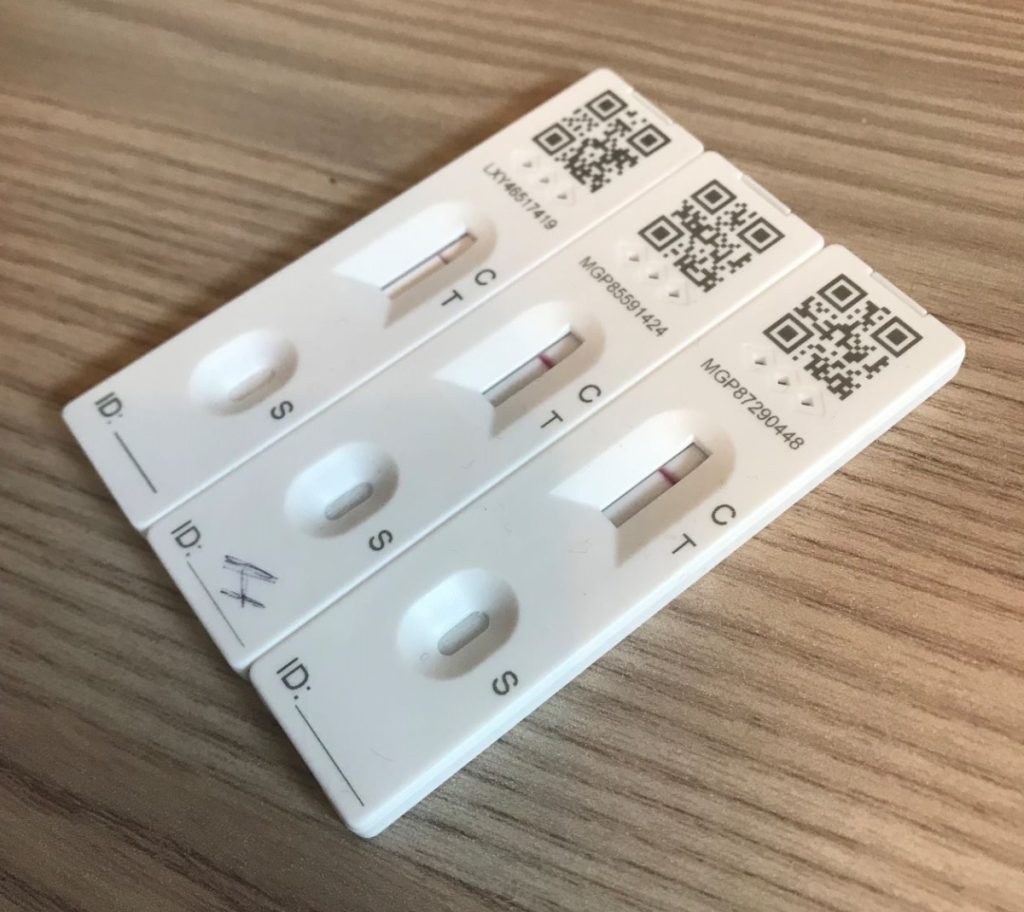
This week has been an interesting one for my family. After being so careful over the last 2years SARS-Cov2 has finally reached our household with my son and wife testing positive this week. Both are fit and well thankfully (apart from the odd cough and achy muscles), but it has meant that we have all been testing ourselves daily with the Lateral Flow tests.

This daily ritual re-enforces the need for effective usability studies to be carried out for in vitro diagnostic medical devices, such as the lateral flow tests, to make sure that these devices can be used quickly, effectively, and safely by any untrained personnel. Under the EU IVD Regulation 2017/746/EU, usability in built into the performance evaluation and clinical performance using the standards IEC 62366-1:2015 Medical devices — Part 1: Application of usability engineering to medical devices, and ISO 14971:2019 Medical devices — Application of risk management to medical devices among others.

One of our expert consultants Anne-Marie Turner considers why usability is important to the IVD design and development process:

“Usability studies are important as they validate the safe and effective use of a device against the intended purpose by gaining evidence from the users, it is a measure of effectiveness, efficiency, and satisfaction to demonstrate that no harm occurs.” 

A key part of this is really understanding your intended purpose, including your intended user and intended use environment. Knowing these basic details for your device really does make a difference, as you can really focus on the key risk elements which need to be considered: 

  • How will a lay-user actually use this test? 
  • Are the instructions clear enough? 
  • How may they be harmed by using the device? 
  • How can we reduce as far as possible the risk of getting an incorrect result?

The IVDR goes further than the IVDD in really asking manufacturers to consider the usability of devices as part of the Post Market Surveillance activity once the device is being sold on the market. Pro-active assessment of real word user experiences should be performed as a regular part of PMS to fully understand, and react to, any changes in the way the devices are being used, and for what purpose.

Anne-Marie sums it up nicely by adding “usability is there to ensure the safety aspects for people using it”, and in that respect, I am very proud to be in an industry that ensures the lateral flow tests we use on ourselves, and our children are designed to be as safe and effective as possible.

Stay safe all!

Stuart

Anne-Marie has worked with many IVD companies designing usability studies as part of the wider design and development process. Contact [email protected] to learn more.

Posted on

IVD Development Investors: [Too] Great Expectations?

“Take nothing on its looks; take everything on evidence. There’s no better rule.”

-Charles Dickens, Great Expectations

This week at IVDeology, we have been speaking to many IVD (in vitro diagnostic) manufacturers regarding the expectations from the investors on the timeline for obtaining a CE mark for their devices. For many SMEs, the funding opportunity is associated with the timelines for delivery. While it is true that placing devices on the EU market with a CE mark has been reasonably straight forward under the existing IVD Directive 98/79/EC, the days of ‘quick’ market access are coming to an end. 

From May 2022 (is it really only a few months away?) IVDs placed on the market in Europe will be required to meet the requirements of the IVD Regulation 2017/746/EU. With this change in regulation, the need to demonstrate safety and compliance is based on evidence, collected in most part before the device is placed on market, The need to establish scientific validity, analytical performance and clinical performance is centric to the device performance evaluation requirements. Collecting such data takes time, money and resource. Investors need to understand that this is an absolute requirement, and cutting corners as part of the design and development process will putt the overall project design process at risk.

View our video on the importance of IVDs

The establishment of a clear regulatory strategy, within a well constructed quality management system is the best way to achieve CE marking success. The more investors reassess their expectations by understand these principles, and the mechanisms required to achieve the compliance, the greater the change of placing safe and effective devices on the market.

IVDeology provide consultancy, training and compliance services to support IVD CE marking, UKCA and RoW registrations. Contact me for more information [email protected]

Charles Dickens spent some of his childhood years in Chatham, Kent. His father John, worked as a clark for the Royal Navy at the Historic Dockyard in Chatham, were IVDeology HQ is located. 

-Stuart Angell, Managing Director, IVDeology Ltd