Posted on

Meet IVDeology at Medica 2023

IVDeology Ltd are headed to Medica 2023 after a successful (but rather tiring!) 2022 expo with Medilink UK

What is Medica?

MEDICA is the world’s leading trade fair for medical technology, diagnostic imaging, health IT, laboratory equipment, diagnostics, physiotherapy equipment and medical consumables held in Dusseldorf, Germany. Year after year it attracts thousands of visitors from all over the world. MEDICA offers a wide range of opportunities to find out about the latest trends and developments in medical technology. Here you can meet leading experts and decision-makers in the medical industry and benefit from their knowledge. The trade fair offers a unique platform for the exchange of information, experience and ideas from the entire medical supply chain.

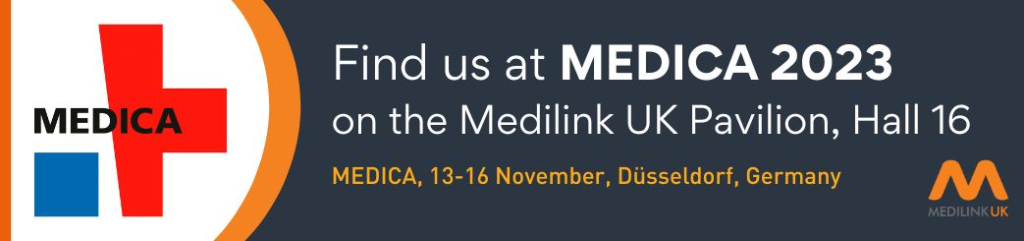
We will be attending with Medilink UK and you can come meet us in Hall 16 at the Medilink UK Pavilion, stand H10-4 where you’ll be able to learn more about IVDeology and the team, how we would be able to add benefit in your companies compliance journey in a way that suits you, and also pick our brains on all things Quality and regulatory within MDR and IVDR.

We will be exhibiting the 13-16th November 2023, and you can drop us a message on Linked in or via [email protected] to book in some time, or simply drop by the stand and say hello! We’re there to support you.

Our MD and founder Stuart Angell will be attending alongside our Customer success and marketing coordinator Casey Sedgwick


There is still time to sign up to exhibit and network with the exhibitors, as well as attend conferences and free industry talks here: To the ticket shop (messe-duesseldorf.de)

We look forward to connecting with new and old friends, colleagues and customers.

bis bald! (see you soon)

Posted on

Innovative Device Access Pathway – Breaking it down

Breaking down The new Innovative Devices Access Pathway (IDAP) initiative – what we know so far

The MHRA have hosted a couple of webinars over the last few days about this new initiative and the IVDeology team joined and came together with their top take aways from the webinar. Here are some of the main points that were raised:

IDAP is designed to provide a pre-regulatory pathway to allow new medical technologies that address an unmet clinical need to get on the market quickly without compromising patient safety.


Currently in the pilot phase, 8 varied technologies will be selected to embark on this pathway. Diagnostics devices and SaMD (including AI) were called out as areas that will be considered. As well as addressing unmet clinical needs, the economic viability of a project, how affordable it is to the taxpayer, how wide a population it could benefit and how accessible it is for patients will be taken into consideration as part of the selection process. 

The IDAP pilot was launched on 18/09/23 and applications are invited via the MHRA website until the closing date of 29/10/23. Subsequently, the 8 technologies will be selected in December 2023 and discussions to develop Target Development Profiles (TDPs) for these technologies will take place between Jan and Apr 2024.

Please note that there is a 2-hour window in which to complete an application, and there is no ‘save’ facility. It is therefore recommended that the guidance is read through carefully first and some preparation work is done in advance of completion.

The aim of IDAP is to provide a streamlined approach to getting exciting new technologies on the UK market utilising a partnership between the MHRA, Health Technology Wales (HTW), the National Institute for Health and Care Excellence (NICE) and the Scottish Health Technologies Group (SHTG). The selected companies will have early conversations with decision-makers which will be extremely beneficial to the success of their product in the long-term.


A range of tools will be available to those companies that get accepted onto the pathway, covering areas such as:

  • Joint scientific advice to create a clinical development plan.
  • A service to support innovator engagement with clinical investigation.
  • Help with auditing of QMS to ISO 13485 standards.
  • Support to help innovators navigate the pathway.
  • An access forum to facilitate access of the technology into NHS use.
  • Where deemed appropriate by the MHRA and, once a clinical investigation trial has been conducted over a 6-month period, selected technologies will be granted early market access via an Exceptional Use Authorisation.
  • Following on from this, there will support on post-market surveillance requirements, further evidence generation for HTA (Health Technology Assessment) and docking with reimbursement pathways.
  • Just to re-iterate, to be considered for the programme, there needs to be an unmet clinical need for the technology and that it will be a real game changer for patients if it gets on the market quickly. A letter of support from clinicians will be required to that effect as part of the application process. 
  • Consider including within your application any evidence of the sustainable features of your device which may support the NHS ambitious net zero targets. These may be factored in the final selection decisions for otherwise equal applications.
  • The aim is to learn from the pilot as to how this programme will work long-term. It is the start of establishing an end-to-end innovative pathway in the UK and they hope, from March 2025, to have a sustainable system going forward.
  • This is an exciting and forward-thinking programme whose success will ensure that state of the art, innovative medical technologies can begin to benefit patients in the UK much earlier than is currently the case. 

If you’d like more information or support regarding any of the above, such as Quality management system implementation, to being regulatory ready for the market, you can email us on [email protected] or you can book a call via this link to speak directly to our team

Posted on

Health and Wellbeing Device Vs Medical Device

Wellness vs IVD medical device – Navigating the blurred line between these sectors

In recent years there has been a surge in companies providing biological wellness data to health and fitness enthusiasts eager to improve their health and performance. These can range from wearable devices such as smart watches measuring heart rates to mail-order kits analysing biological samples.

Advances in technology mean larger and more complex data streams can be analysed and presented in a user-friendly way which means more companies have become interested in this space. But the distinction between the wellness and IVD medical device is becoming increasingly blurred. Products are sometimes unintentionally entering the medical and in-vitro diagnostic space, opening them up to the demands of the applicable regulatory requirements. 

So, how can the line between a wellness device and an IVD medical device be defined?

As a manufacturer, the first step in classifying your product is to determine a clear intended purpose and user. If it has a medical purpose, then your product is a medical device. 

The EU In-Vitro Diagnostic Regulation (IVDR) ((EU) 2017/746) defines IVD medical devices as devices used to examine specimens derived from the human body to provide information on one or more of the following:

a) concerning a physiological or pathological process or state, 

b) concerning congenital physical or mental impairments, 

c) concerning the predisposition to a medical condition or a disease, 

d) to determine the safety and compatibility with potential recipients, 

e) to predict treatment response or reactions,

f)  to define or monitoring therapeutic measures

The device can be a reagent, reagent product, calibrator, control material, kit, instrument, apparatus, piece of equipment, software or system and used alone or in combination with other medical devices.


It is important that as a manufacturer you highly consider your intended purpose and ensure that you do not stray into an area that could be considered to have a medical purpose if you want to remain within the wellness area. It is not sufficient to write disclaimers such as ‘this product is not a medical device’ to diminish any regulatory responsibilities if the device is in fact a medical device as per the definition.

The FDA have published guidance on its definition of a general wellness product. It states that a general wellness product has to have:

1) an intended use that relates to maintaining or encouraging a general state of health or a healthy activity, or

2) an intended use that relates the role of healthy lifestyle with helping to reduce the risk or impact of certain chronic diseases or conditions and where it is well understood and accepted that healthy lifestyle choices may play an important role in health outcomes for the disease or condition.

The examples that it shares can show that the same device can be considered wellness or a medical device depending on what you determine the intended purpose to be. If the manufacturer claims their product “promotes or maintain a healthy weight, encourage healthy eating, or assist with weight loss goals” this could be considered wellness, however if the manufacturer claims that a product “will treat or diagnose obesity” then it has a medical purpose and would fall under the medical device regulations.

Therefore, it is important to ensure that any information supplied with your product, or any marketing, does not contradict your intended purpose. Article 7 of the IVDR states that you cannot make any claims in any of your labelling or advertising that may mislead your user or patient. So it is worth carefully considering the language used on your website, avoiding the use of common medical terminology when describing your product and making sure that you do not make any statements implying a medical purpose if you want to remain in the wellness area.

With specific reference to software, the US Federal Food, Drug & Cosmetic Act specifically excludes ‘Software that is intended for maintaining or encouraging a healthy lifestyle and is unrelated to the diagnosis, cure, mitigation, prevention or treatment of disease is not a medical device.’

A few software examples:

1) If the software is just presenting data from an existing IVD system that is already regulated, the software is managing IVD data, but it is not an IVD medical device. For example, presenting data from an IVD device that takes a measurement and says you have cancer.

2) If that software then has an additional capability to alter the data with extra information and say, for example, the patient has breast cancer, then the software is now a medical device.

Ultimately, the classification decision making process is a risk-based one. Is the information provided by the device provided simply to encourage people to lead healthier lives or is the information guiding a clinician to make medical decisions? The patient and their clinician are trusting the information to be correct and therefore the device will need to comply with regulatory requirements. You can find more info here regarding regulatory requirements including individual rules for specific country registration

It is also helpful to look at any competitor devices/similar devices to see how they’ve been classified. If a notified body has deemed them to be a medical device, then yours is also likely to be a medical device. There is a MDCG guidance Manual on borderline and classification for medical devices under Regulation (EU) 2017/745 on medical devices and Regulation (EU) 2017/746 on in vitro diagnostic medical devices which is being updated as these decisions are being made and is therefore worth consulting regularly.


Of course, this does not mean that best practices can’t be or shouldn’t be followed by manufacturers of wellness devices, but the level of regulatory scrutiny is lower. Manufacturers of wellness products still have responsibilities to ensure that their products are safe for their customers.

If you are developing a tool or product that you would like to determine as a wellness product, or worried about the product falling under Medical regulations, or if you are just not sure either way, you can book a call with the IVDeology team and we’d happily discuss your product, its intended use, and with pathway to go with your product, and support you through that process – click here to put some time into our diary with a friendly team member

Posted on

IDAP Launch Medical Device Safety Innovation program

The MHRA announced yesterday 19th September 2023 some fantastic news for medical device and diagnostics manufacturers; the IDAP program. The Innovative Devices Access Pathway (IDAP) program is designed to accelerate the development of medical devices and their integration that are both cost effective and safe for patients and end users. 

This initiative is to bring new technologies and solutions to the National Health Service (NHS) to help with medical needs that are not currently being met. Not only that, but this would improve and increase patient access to innovative and transformative medical devices by providing an integrated and enhanced regulatory and access pathway to developers. 


Successful applicants will receive non-financial support from a team of experts to develop a product specific Target Development Profile (TDP) roadmap. The TDP roadmap will define Regulatory and Access touchpoints across the product development, which could include;

– Quality management system (QMS) support

– System navigation

– Fast track clinical investigation

– Advice with scientific partners

– Product realisation and adoption from the HTA (Health technology assessments)

– NHS adoption

– Exceptional use authorisations from the MHRA where applicable 


The IDAP is open to UK and international commercial and non-commercial developers with new health technology solutions and will choose 8 products to proceed. All size companies that fit the below applicant list can take part: 

– Product must be a medical device and/or diagnostic tool

– Must have legal entity to market their product in the UK (IVDeology can help with becoming your UKRP – click here for more info)

– Early stage companies must demonstrate proof of concept evidenced by data from a near final prototype of the product 

– Applicants must have the intention to market their product in the UK and obtain regulatory authorisation (IVDeology can support on this – click here)

– Applicants must have UK clinical investigations sites lined up

– Applicants must commit to working with IDAP to create target developments profiles

– The technologies must be able to demonstrate evidence of ISO13485 certification (IVDeology can support with QMS implementation – find out more here)


Pilot launch: 19th September
Pilot outcomes: December 2023
Profile engagements: Jan 2024

Follow the link here to start your application process – and we wish you all the best of luck!

Posted on

New approved MDR and IVDR notified bodies

Recently we have seen updates from the MHRA (medicines and healthcare regulations authority) appointing new notified bodies for the MDR (medical device regulation), supporting faster certification of safe and effective medical devices for healthcare professionals and the public.

These include:

– TÜV SÜD

– Intertek 

– TÜV Rheinland 

TÜV Rheinland UK has also been designated to assess and certify general medical devices as well as in-vitro diagnostics (IVD’s).

This almost doubles the number of notified bodies meaning more availability for appointments of bodies for product registrations.

TÜV SÜD becoming a UKAB (UK approved body) also means they can simultaneously provide UKCA and CE marking certifications for medical device manufacturers, this can and will reduce the time it takes to market across Europe and hopefully also save money. 

If you are looking to get in a position where your devices are compliant and ready for submission from a regulatory and/or Quality standpoint, you can see our Regulatory Submission Support page here, which includes UKCA marking, and our Quality management systems support page here 

You can see the full publication on the UK GOV website here 

Posted on

Clarity for CE marking on IVD’s and Medical Devices

Long awaited news from the #MHRA regarding #CE marking for Medical devices – previously it was communicated that there would be an indefinite recognition of CE marking. The update was lacking on clarity for which specific products this was relevant to.

However, (yesterday) on the 1st August, confirmation that this does NOT apply to Medical Devices or IVD’s

A quick refresher:
– Medical devices with a CE mark under the #MDD can be placed on the UK market until June 30th 2028 or until certification expires
– Medical devices with a CE mark under the #MDR can be placed on the UK market until June 30th 2030 or until the expiratory on the certificate

-IVD Medical Devices compliant with the EU IVD devices directive (EU IVDD) can be placed on the UK market June 30th 2030 or until the expiratory of the certificate

This is a refreshing and long awaited update for the clarity of the CE marking for those manufacturing devices. If you’d like to discuss CE marking and/or UKCA marking, please get in touch and our friendly team will respond.

Posted on

WTO Publish UK MDR Post Market Surveillance Draft

The new Draft Statutory Instrument for Medical Devices (Post Market Surveillance) has been published on the WTO website this afternoon (SI/SR Template (wto.org)).

Our first initial review for IVDs from a quick read this afternoon is the following:

  • Post market surveillance is required for the whole of the “PMS period” – this is the time from the device first being placed on market, until the end of life of the last device placed on market.
  • The Vigilance reporting timelines are the same as IVDR – 15 days for serious incident, 2 days for serious public health threats & 10 days for death or unanticipated serious deterioration in a person’s state of health.
  • Field Safety Notices, where required, have to be provided to all known users of the device and published on the manufacturer’s website
  • Post market surveillance plans are required
  • Post market surveillance reports are required every 3 years for General IVDs (or Class A or B devices under IVDR)
  • Periodic Safety Update Reports are required every year for Annex II IVDs (or Class C or D devices under IVDR) and have to be provided to approved bodies for review.
  • PMS documentation has similar requirements to the IVDR and has to be retained for the “PMS period” or 10 years whichever is longer.

Overall, our first impression is that this is very similar to the requirements in the IVDR which is very welcome news for the industry.

Posted on

Taking Back Some Time

The world of IVDeology can be all consuming some times, with so much change, opportunity for growth and learning new things it can be hard to find the time to recharge the batteries. 

Since the creation of the company by myself and Nancy in 2018,  it has always been difficult to fully get away from the day to day running of the business, and the work phone is never too far from your hand (I am sure all small business owners often face this same dilemma). However we have build a truly awesome team around us, bringing positivity, togetherness and excellent IVD knowledge to run, organise and manage the running of the company, So last week I had a full week off, sailing in my Dinghy at the Wilsonian Sailing Club on the river Medway in the South East of the UK where I live.

During the week we, had the benefit of a great coach, some super safety boats keeping watch and keeping us safe, and some lovely weather to help us enjoy the week. 

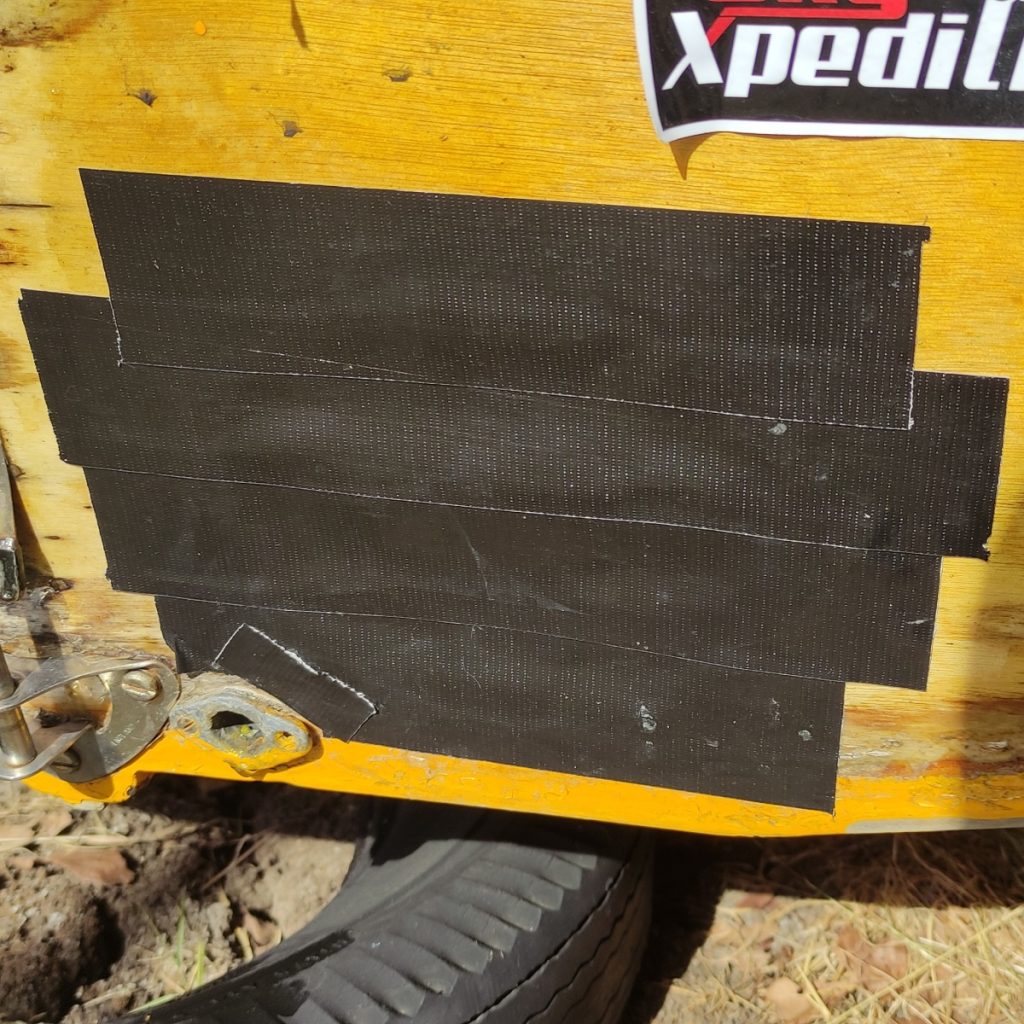
Having an old wooden boat, I did have some complications, bits and bobs fell off or snapped during the week and I had to make some running repairs – check out my previous blog on boat maintenance and boat repairs, and how this can be related to a Quality Management System.

(See the above patch up job fixing a hole in the rear of my boat (the transom port without the flap… which fell off, when the mainsheet snapped!))

I have only been sailing for a year, and I still have enormous fear and anxiety whenever I step in the boat. It is much easier for me not to try, or find excuses why I can’t go out it in. But similar to running a business, if you never try, you never learn something new, and you never succeed.

And I had a truly great time!

So on reflection of the week, I am hugely grateful for the folk at the sailing club for supporting me, teaching me new things about sailing – but also for my great IVDeology family who I can trust to run the company smoothly in my absence.

5 key learning points:

  • Be positive and you can achieve great things 
  • Trust your team, they are better than you can ever believe they can be
  • Take some time out for yourself
  • Preventative boat maintenance is key
  • Gorilla Tape fixes everything – including holes in a hull of a boat

Happy Sailing all!

Posted on

Impact of IVDR Transition in Australia

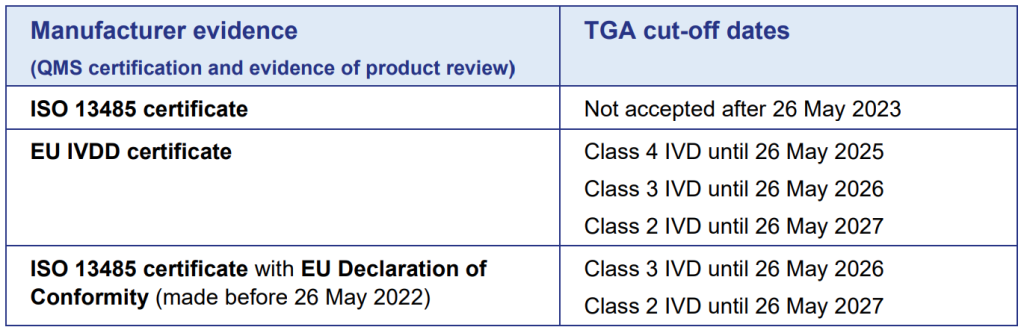
Last month the TGA, the competent authority in Australis has issued an update on the  Transition to new manufacturer evidence for IVD medical devices (tga.gov.au). This document explains the new requirements for manufacturers to demonstrate that they meet the requirements for IVD in Australia.

Typically, the use of CE marking has been used to demonstrate compliance to the TGA requirements, and the EU declaration of Conformity, along with an ISO 13485 certificate. However, with the transition to the IVDR, the TGA are requiring new evidence to be provided.  

For new devices, an alternative to an ISO 13485 certificate is required, namely an MDSAP certificate covering ISO 13485 requirements. They will also be accepting IVDD certificates with existing ISO 13485 certificates during, and aligned to the IVDR transition dates.

Summary of TGA cut-off dates

Posted on

Reflections on MedTech Summit: is 2023 the year of opportunity?

The annual MedTech Summit was held this year in Brussels. The IVD stream provides 2 days of focused content relevent to the IVD Industry, strongly focusing on the EU IVDR. I was fortunate to present a session on Intended Purpose under the IVDR, something that is very critical to the transition to IVDR. Anyone who has listened to me present previously knows that I strongly recommend a good, early understanding of the Intended Purpose of the device.

In an attempt to summarise the discussions over the last 2 days, I have three main take away messages:


See IVDR as a positive opportunity

Since the IVDR was first published, the industry had widespread concern with the problems the industry would face to get ready for the higher compliance. Delays in infrastructure, including a slower update of Notified Bodies to support the process, resulted in additional transitional timelines for class B, C and D devices. 

Feedback from a number of Notified Bodies now suggest that they are all open for new applications, and they have the resource to support manufacturers for conformity assessments. It is the manufacturers themselves who are not ready for the application process. While it is understandable that external political, economic and practical factors are delaying manufacturers readiness to IVDR, there is no better time to push forward with the process. While some elements still need to be addressed (EUDAMED, EURLs), on the whole, the industry has enough knowledge, guidance and resource to successfully implement IVDR. 

So if you haven’t started, don’t delay, start the process! You can get through it. NBs have the time and capacity (for now) to support you through the process. We know that this capacity will be taken up from 2024 as we get nearer the deadlines: so get ahead of the crowd – there is no better time to make a start!


Make the best effort you can on your technical documentation

All devices will need to have an new or updated series of technical documentation to be ready for IVDR, irrespective of class. From the discussions, the message is clear. Closely follow Annex I, II, III and guidance provided by the NBs as best you can. Really take on board the principles of Clear, Organised, Unambiguous, and Readily Searchable when building your documents. 

There is a correlation between the time and effort building your technical documentation, including your analytical and clinical data, and the successful outcome and time taken for the conformity assessment. The better you prepare the higher a chance of success.


Make UKCA work for your business goals

Hopefully you will have seen the update from the MHRA on the timelines for UKCA marking. More will be coming in the months ahead as we gear up to the new MDR2002 (UKCA). However, up until June 2025, manufacturers placing new devices on the UK market can benefit from the existing MDR requirements based on the IVDD. The majority of devices remain self-declared (except high risk devices, and self-tests), so while you still need to meet the safety and performance requirements of the UK regulation, this remains a quicker and cheaper route to market compared to the EU, FDA (and UK beyond 2025). Once your devices are placed on market, you will have 5 years to build up your QMS and Technical Documentation to meet the new UKCA requirements.

For SMEs especially, this would allow devices to be on market, producing revenue quicker, and in an important market, while you continue to develop and grow your regulatory compliance. But you don’t have long, now is the time to start this process!


Overall, being at events like MedTech Summit, it reminds me how great our industry is. The effort, positivity and willingness to make a better healthcare system for patients is truly remarkable, keep up the great work people, we can and will overcome!!

For further information or further insights on UKCA or IVDR, or how IVDeology can help you with your regulatory goals, please contact [email protected] to book a call with me.