Posted on

Person Responsible for Regulatory Compliance under Article 15 of the IVDR

In the realm of In-vitro diagnostic Medical devices, regulatory compliance is non-negotiable. The European Union In Vitro Diagnostic Regulation (IVDR) have set stringent standards to ensure the safety and efficiency of medical devices. A pivotal role introduced by these regulations is the Person Responsible for Regulatory Compliance (PRRC). The PRRC is tasked with ensuring that all regulatory requirements are met, from product development through to post-market surveillance. This role is essential for maintaining the quality and safety of medical devices, and compliance with these regulations is mandatory for companies operating within the EU.

However, for many companies, especially small to medium-sized enterprises (SMEs), the challenges associated with maintaining an in-house PRRC can be daunting. This is where outsourcing the PRRC role comes into play. Article 15 of the IVDR allows the utilisation of external PRRCs for micro and small enterprises. IVDeology have a proven track record in providing expert regulatory expertise to SMEs.

Company categoryStaff headcountTurnoverorBalance sheet total
Medium-sized< 250≤ € 50 m≤ € 43 m
Small< 50≤ € 10 m≤ € 10 m
Micro< 10≤ € 2 m≤ € 2 m

Source: SME definition – European Commission (europa.eu)


Access to Specialised Knowledge

One of the most significant benefits of outsourcing the PRRC role is the access to specialized expertise. Regulatory compliance is a complex and ever-evolving field, requiring a deep understanding of both the regulations and the specific products being developed. Outsourcing to a third-party provider ensures that the PRRC has the necessary experience and knowledge to navigate these complexities. These experts are typically well-versed in the intricacies of the IVDR, and they stay abreast of the latest developments in the regulatory landscape. This level of expertise can be particularly advantageous for companies developing innovative or highly specialized products, as it ensures that all regulatory requirements are met to the highest standards.


Saving Time and Money in the Long Run

Hiring and training an in-house PRRC can be a costly endeavour. The recruitment process itself can be expensive, and once a suitable candidate is found, they need to be trained and continuously educated on the latest regulatory requirements. Additionally, the salary for an experienced PRRC can be substantial. By outsourcing this role, companies can reduce these costs significantly. Third-party providers typically offer their services on a contract basis, which can be more cost-effective than employing a full-time, in-house PRRC. This approach allows companies to allocate their financial resources more efficiently, investing in other critical areas of their business such as research and development, marketing, or expanding their product portfolio.

Our aim is to work with our clients to develop a succession plan for the eventual internal replacement of our virtual PRRC. We will train and mentor the identified internal team members so build the experience required to meet the requirements of Article 15.

Letting Experts Handle Compliance

Regulatory compliance, while essential, is often not a company’s core activity. For many organizations, particularly SMEs, the primary focus is on developing innovative products, enhancing customer experiences, and growing their business. We understand that some organisations may not want to build their regulatory team internally, so we always try to build long term relationships with our customers for continuous support. By outsourcing the PRRC role, companies can allow their internal teams to focus on these core activities. This not only enhances productivity but also ensures that the regulatory compliance function is handled by experts. This separation of duties can lead to better outcomes in both regulatory compliance and overall business performance.

“Regulatory compliance is the responsibility of everyone in the organisation, the PRRCs core responsibility is to observe, reflect and advise on the overall compliance state of the organisation to senior management”

Adapting to Changing Needs

The regulatory landscape is constantly changing, and the demands placed on the PRRC can vary significantly over time. Outsourcing the PRRC role offers companies the flexibility to scale their regulatory compliance efforts up or down as needed. For instance, during periods of intensive product development or regulatory scrutiny, a company may require more comprehensive compliance support. Conversely, during quieter periods, the level of support needed may be reduced. Outsourcing allows companies to adapt to these changing needs without the long-term commitments associated with employing a full-time, in-house PRRC. This flexibility can be particularly beneficial for companies with fluctuating workloads or those operating in highly dynamic industries.

Ensuring Compliance and Avoiding Penalties

Non-compliance with regulatory requirements can result in severe penalties, including fines, product recalls, and even the suspension of business operations. The PRRC plays a crucial role in mitigating these risks by ensuring that all regulatory requirements are met and that any potential issues are addressed promptly. Outsourcing the PRRC role to a reputable third-party provider can enhance this risk mitigation process. These providers have the experience and resources to conduct thorough compliance assessments, implement robust quality management systems, and respond swiftly to any regulatory changes or issues. This proactive approach can help companies avoid the costly consequences of non-compliance and maintain their reputation in the market.

Staying Ahead of Regulatory Changes

The IVD industry is characterized by rapid technological advancements and frequent regulatory updates. Staying ahead of these changes is critical for maintaining compliance and achieving business success. Outsourcing the PRRC role to a third-party provider ensures that companies have access to the latest regulatory knowledge and best practices. These providers invest in continuous education and professional development to stay current with regulatory changes. By leveraging their expertise, companies can continuously improve their compliance processes, adapt to new regulations seamlessly, and maintain a competitive edge in the market.

Giving you a Strategic Advantage

Outsourcing the PRRC role offers numerous benefits for companies operating in the medical device industry. From accessing specialized expertise and achieving cost savings to enhancing focus on core activities and adapting to changing needs, outsourcing provides a strategic advantage. By partnering with a reputable third-party provider, companies can ensure that their regulatory compliance efforts are handled by experts, mitigating risks and driving continuous improvement.

In an industry where compliance is critical to success, outsourcing the PRRC role can be a game-changer, allowing companies to navigate the complexities of regulatory requirements with confidence and achieve their business goals.

For further information on how we can support you, please contact us.

Written by Stuart Angell, Co-founder and Director of IVDeology, part of TEAM PRRC
Posted on

Apply for the MedTech Accelerator: Rapid Regulatory Support Fund 2024

On the 9th October 2024, it was announced that on behalf of the UK Government’s Office for Life Sciences, CPI has created the MedTech Accelerator for companies to apply for up to £30,000 of funding. An exciting opportunity for companies to lean into extra support which is most likely critical for progression of their product compliance journey.

What is the MedTech Accelerator?

It has been developed to help small and medium-sized business to navigate the complex and ever-changing MedTech regulatory landscape and for those who rely on external expertise to develop, commercialise and register life-changing products onto the market, to allow reduction on NHS services and improve patient safety.

This comes after the HealthTech Regulatory Innovation program (HealthTRIP) funded by Innovate UK back in 2022, which similarly help support SMEs overcome regulatory challenges but also hurdles that come along within Quality assurance. The programme awarded 277 companies.

Who is the Accelerator for?

The funding is aimed at UK SMEs developing or offering medical device (including Software as a Medical Device) and diagnostics (including IVD) products or services. Although pharmaceutical products are not considered eligible under this programme, combination medical products such as drug delivery devices would be considered eligible. If you are not sure if your product is eligible, you can reach out to us here at IVDeology to discuss further and we’d be happy to chat.

Am I eligible?

Only UK-based SMEs are eligible to apply to this programme.  

  • Applications will only be accepted from and will be awarded to a single legal entity.  Only one application per company or company group is allowed.   
  • Applications must be from a UK registered SME company which is developing or currently producing and selling MedTech as they are outlined in the Medicines & Medical Devices Act 2021

You can find more information and links here: Eligibility | CPI (uk-cpi.com)

Why should I apply?

The regulatory landscape for MedTech is constantly changing, including a divergence between the UK and EU systems. This is leading to some UK companies finding their products no longer meet the regulatory requirements to be sold within the EU. The MedTech Accelerator: Rapid Regulatory Support fund aims to help SMEs overcome this barrier and hopefully reduce timelines, release financial tension, and encourage businesses to keep moving forward with their innovations and offer some expertise comfort, which is where IVDeology come in.

How do I apply?

Applications opened on Wednesday 9th October 2024, at 9am and close on Thursday 31st October 2024, at midday UK GMT.

CPI will review applications regularly, and if they receive 300 before the deadline, they will close applications early. Companies are, therefore, encouraged to apply as soon as they can as it is a first come first serve.

Please refer to the eligibility section above before proceeding with your application. The form can be downloaded and filled in here: MedTech Accelerator – Rapid Regulatory Support Fund (office.com)

Results Announced: by Friday 29th November 2024 but applications could be stopped earlier dependent on which is reached first, the 300 applicant limit or the date.

You said IVDeology can help – tell me more?

IVDeology have been dedicated to supporting companies of all sizes with their compliance journey since we began in 2018, and regulatory affairs is a HUGE part of that. But we especially understand the strains and challenges SME companies face, starting with design and innovation to regulatory challenges, getting on the market and actually staying there.

We have played a big part in some of our customers funding journey, including a company that applied for the 2022 HealthTRIP innovation grant (as previously mentioned) and used our services to support and perform the following:

  • Regulatory Health Assessment: this allowed us to find any gaps but also strengths within their design and development of the device and highlight areas best to support including being able to put together a regulatory roadmap
    • A gap assessment: this allowed us to review all processes and controls, including technical documentation for Quality assurance as well as regulatory
    • Workshop training sessions: this allowed us to work closely with the team to not only present the work and support, but allow learning opportunities around requirements and what they mean personally to their business
    • Q&A sessions: This allowed focused time with the customer and IVDeology to present any questions, raise any queries and catch up sessions to discuss the outcomes of the workshop sessions
    • Additional support hours: this allowed us to have dedicated time with the customer to work on any additional support that we may have highlighted in the gap assessments, including developing regulatory templates and processes including design and risk management (ISO14971)
    • A draft of a Clinical Evaluation/Performance Evaluation procedure (PER)

IVDeology are here to support you at any stage of your journey. We’re committed to putting time with our customers to understand where you are personally. We can find the gaps and identify the challenges, use our time and your funding wisely with implementing a regulatory strategy from the beginning for clarity, and work with you in a way that supports both your regs needs, but also supporting you with implementing a real working Quality management system (QMS).

We’re happy to work with you in a format that suits you best, from regular supporting hours to training and workshops, and if you’re not sure how best to decide, we’d be more than happy to book in some time to discuss what would work best for you, your team and your business.

We’re excited to see you apply, and we’ll be here to chat with you about supporting this next leg of your compliance journey. You can get in touch with us via LinkedIn, email on [email protected] or simply book time into our calendar here

Written by Casey Sedgwick, IVDeology Customer Success and Marketing Coordinator

Posted on

Near-patient Testing – Is it the Future for Diagnostics?

There has been a lot of discussion surrounding the focus of treatment within primary care.  The NHS published guidance in August 2023 for integrating point of care IVD’s (NHS England » Integrating in vitro point of care diagnostics: guidance for urgent community response and virtual ward services).  The Labour Party’s recent manifesto for the 2024 General Election stated that “Labour’s reforms will shift our NHS away from a model geared towards late diagnosis and treatment, to a model where more services are delivered in local communities” and “The National Health Service needs to move to a Neighbourhood Health Service, with more care delivered in local communities to spot problems earlier. To achieve this, we must over time shift resources to primary care and community services.”  (Change Labour Party Manifesto 2024).  Whilst this is good news for patients, it is not as simple as changing the location of the testing – there will be implications for the IVD industry in order to meet these proposals.

The In Vitro Diagnostic Medical Devices Regulation (Regulation (EU) 2017/746, ‘IVDR’) defines a “device for near-patient testing” as “any device that is not intended for self-testing but is intended to perform testing outside a laboratory environment, generally near to, or at the side of, the patient by a health professional.”

During Design & Development, IVD manufacturers have to determine the use environment and end users within their intended purpose.  It is then their responsibility to demonstrate that the device is safe and effective when used in these environments by these intended end users and therefore there will be a number of additional requirements that need to be considered for devices intended for near-patient testing.

Performance Requirements:

The performance testing conducted will need to demonstrate that effective and reliable testing outside of the traditional controlled laboratory environments.  Considerations such as the following will need to be considered:

  • Use Environment Testing:

Annex I section 9.4 states “The characteristics and performances of the device shall be specifically checked in the event that they may be affected when the device is used for the intended use under normal conditions:

(b) for devices for near-patient testing, performances obtained in relevant environments (for example, patient home, emergency units, ambulances).

Testing of the device will therefore need to be conducted in the intended use environments. Manufacturers will need to show that the test can be used reliably in the environments that they indicate that the test can be used in. This could be, for example, doctor’s surgeries, A&E departments, patient’s homes or in ambulances.  Any conditions specific for these environments would need to be considered e.g. vibrations or temperature fluctuations for devices intended to be used on an ambulance.

  • Usability Studies:

Annex I section 19.1 states that “Devices intended for self-testing or near-patient testing shall be designed and manufactured in such a way that they perform appropriately for their intended purpose taking into account the skills and the means available to the intended user and the influence resulting from variation that can be reasonably anticipated in the intended user’s technique and environment. The information and instructions provided by the manufacturer shall be easy for the intended user to understand and apply in order to correctly interpret the result provided by the device and to avoid misleading information. In the case of near-patient testing, the information and the instructions provided by the manufacturer shall make clear the level of training, qualifications and/or experience required by the user.

It is important for manufacturers to have designed their device in such a way as to ensure that the intended end users can successfully use the device.  Therefore it is vital that manufacturers conduct usability studies with their target end users who are often not laboratory trained personnel.  This can then be used to demonstrate that consistent results can be obtained by these target end users, determine if the instructions provided with the device are adequate and help to identify if any training is required for the end users before the device can be used reliably.

Labelling Requirements:

The IVDR has also introduced specific labelling requirements for NPT (near patient testing) devices, including:

  • Devices labelled as Near-Patient Testing: The device label must indicate that the device is for near-patient testing.  Although there are currently no symbols for this within ISO 15223-1:2021 Medical devices – Symbols to be used with information to be supplied by the manufacturer, MedTech Europe has provided some suggested symbols that can be used to indicate near-patient testing (New IVD symbols for compliance with the IVDR – MedTech Europe).
  • Individual Instructions for Use: Each individual device must be accompanied by its own instructions for use (IFU).  For devices for professional use within a laboratory setting, if multiple devices were supplied then a single copy of the IFU could be provided if agreed by the purchaser.  This is not allowed for devices intended for near-patient testing.
  • Paper-Based Instructions: According to Annex I 20.1(f) of the IVDR, the instructions for use must be provided in a physical paper format for near-patient tests, and, unlike laboratory based professional use devices, cannot be provided in electronic format.
  • Language Requirements: The languages that the Member States require for the device label and instructions for use for near-patient testing may be different to those for professional use only tests.  This may add more translation costs on to manufacturers to access different markets.

The labelling provided must be appropriate to the device, its intended use, and the technical knowledge, experience, education, or training of the intended users.  This will need to be considered by manufacturers when designing the labelling and tested during usability studies.

Notified Body Assessment

Whilst devices for near-patient testing are classified in their own right according to Annex VIII rule 4(b), the notified body assessment is slightly different.  For Class B & Class C devices, the technical documentation of all devices for near-patient testing has to be assessed rather than the notified bodies sampling one technical file per generic device group or device category. Where a manufacturer has a number of devices for near-patient testing the increase of upfront cost to have their devices assessed will need to be considered.

Final thoughts

Whilst near-patient testing seems like a real win for patients and the direction of travel that the diagnostic industry is heading, this does provide some challenges for manufacturers.  The additional burden to demonstrate that the device is effective and reliable when used outside of a laboratory setting and the potential increased upfront costs of conformity assessment is something that needs to be considered before being able to place the device on the market.  For Great Britain, although the UK MDR 2002 does not specifically call out devices for near-patient testing currently, the indications from the MHRA on the future regulations is that it will be similar to the IVD Regulation with the new Essential Requirements being based on the General Safety & Performance Requirements.  This is likely therefore to mean that the additional requirements for these types of devices will also be required here.  However, if done correctly, near-patient testing will enable quicker diagnoses for patients and hopefully therefore better patient outcomes, which is ultimately what the IVD industry wants to support.

If you’d like to discuss near-patient testing or any of the compliance services that come along with it, from design and development to regulatory services, you can speak to us by dropping an email to [email protected] or book time with us via this link for when best suits you

Posted on

Regulatory Strategy: What is it, and why do you need one?

If you are planning to place an in vitro diagnostic medical device (IVD) onto the market, It is critically important that you consider your regulatory strategy at the earliest opportunity. In our experience, building an effective strategy for regulatory strategy can be the difference between achieving product market access or not.

What is a Regulatory Strategy?

A Regulatory Strategy is a documented plan of all regulatory activities and deliverables that are required to be performed by a Legal Manufacturer. It should also align with the overall objectives of your organisation as defined within your vision, mission and business plan.

This should lay out a framework for placing an IVD on the market or markets depending on your commercial opportunity. Typically, the organisation will identify a priority list of countries where it is intending to sell the devices, the regulatory strategy describes the order of which these countries are being registered in.

Once the device is on the market, the plan continues to drive the regulatory surveillance mechanisms described as part of Post Market Surveillance as part of your ISO 13485 Quality Management System. It should also include a plan for meeting any transitions to updated regulatory requirements or ISO standards associated with the device.

Why do you need one?

For devices being placed on the European market under European IVD Regulation (IVDR), Article 10 (Manufacturers Obligations) describes the requirement for maintaining a regulatory strategy:

The quality management system shall address at least the following aspects:

(a) a strategy for regulatory compliance, including compliance with conformity assessment procedures and procedures for management of modifications to the devices covered by the system;

Furthermore, Annex IX requires the Quality Management System to include within its procedures, “a strategy for regulatory compliance, including processes for identification of relevant legal requirements, qualification, classification, handling of equivalence, choice of, and compliance with, conformity assessment procedures.”

In addition to the regulatory expectations, it is also hugely beneficial to plan and document the path to device registration and beyond. It also offers clear evidence to investors that the route to market has been considered and is planned.

When should you create one?

Typically, the regulatory strategy is formed, at a basic level, early on within the design and development process. Once your business vision and mission has been identified, and your business plan establishes the potential for the development of an IVD, the route to achieving that vision should now be considered.

Developing a regulatory strategy is an iterative process as many of the elements required will not have been considered or nailed down. This is entirely normal, but it is important to do the groundwork and start somewhere!

Our Approach to Regulatory Strategy

Education of the basic IVD requirements

A regulatory strategy can take many forms and will grow as you progress through the D&D process. We prefer to work with our SME customers and provide a regulatory strategy blended with some in-house training (virtually or on your site globally) on the key IMDRF principles, definitions and concepts of the regulation of IVDs. We aim to cover the main markets notably the EU, UK and MDSAP countries, to give you the best possible start in understanding what you need to know before developing your device.

Evaluate device type and classification and routes to market

Using your existing ideas of what your device is, and how it should be used, we can help you construct an Intended Purpose Statement, which is the bedrock of how IVDs are classified and assessed. We will guide you through how to assign device nomenclature including GMDN or EMDN codes to understand the routes for conformity assessment and submission requirements, EU Notified Bodies or UK Approved bodies as required. The output of this evaluation will be detailed within a Regulatory Strategy Report, which you can share with your wider team and investors.

The strategy should sit alongside the Quality Plan, used to identify and plan the implementation of a Quality Management System (QMS).

End to end planning

We can incorporate our knowledge to help you understand an estimation of design and development stages with associated costs. This will help you identify when you need to grow and when to secure additional funding. Our experience however is that bringing an IVD to is never a straight line and your regulatory strategy may change over time. We can give you the background knowledge and tools along the way to navigate the complexities and challenges that you may face.

Be part of the journey with you

As part of the Abingdon Health group, IVDeology can spend time with you to understand, explain and build your regulatory strategy together that works towards your timelines and business project goals, but not only that, we can work together as a strong technical team with your business to support any gaps you may need. IVDeology building your regulatory plan with you means you always have a supportive hand for any questions, queries or concerns every step of the way with a team who knows your goals and vision.

If you’d like to discuss a regulatory plan, whether you have an existing one already or starting from scratch, you can book a call here, or email us on [email protected] and we’d be happy to help!

Posted on

MDSAP: Explaining the complexities and importance

The Medical Device Single Audit Programme (MDSAP) is a system by which the participant competent authorities to recognise the quality management certification (as awarded after audit against both ISO 13485 and county specific requirements) from a single authority for medical device and in-vitro diagnostic medical device (IVDs) legal manufacturers.

The programme has been established by the International Medical Device Regulators Forum (IMDRF) and is intended to provide a harmonised approach to demonstrating the compliance of the Quality Management System (QMS) using a globally recognised approach.

The MDSAP was developed by the IMDRF to:

  • Enable appropriate regulatory oversight of medical device manufacturers’ quality management systems while minimizing regulatory burden on industry;
  • Promote more efficient and flexible use of regulatory resources through work sharing and mutual acceptance among regulators while respecting the sovereignty of each authority;
  • Promote globally, in the longer term, a greater alignment of regulatory approaches and technical requirements based on international standards and best practices;
  • Promote consistency, predictability and transparency of regulatory programs by standardizing;

    1. the practices and procedures of participating regulators for the oversight of third party auditing organizations, and
    2. the practices and procedures of participating third party auditing organizations

Regulatory Authorities

MDSAP consists of Regulatory Authority Council Members, Observers and Affiliate members:

Regulatory Authority Council Members:

  • Therapeutic Goods Administration of Australia
  • Brazil’s Agência Nacional de Vigilância Sanitária
  • Health Canada
  • Japan’s Ministry of Health, Labour and Welfare, and the Japanese Pharmaceuticals and Medical Devices Agency
  • U.S. Food and Drug Administration

The RAC is the decision-making body of MDSAP and consists of representatives from all regulatory authorities that are members of the RAC. The RAC provides direction, oversight, and resources to support the MDSAP development, implementation, maintenance, and expansion.

Observer Members:

  • European Union (EU)
  • Singapore’s Health Sciences Authority (HSA) (NEW)
  • United Kingdom’s Medicines and Healthcare products Regulatory Agency (MHRA)
  • The World Health Organization (WHO) Prequalification of In Vitro Diagnostics (IVDs) Programme

The observers do not observe RAC members and do not attend RAC meetings, but they do observe and contribute the RAC activities. Both the EU and UK have been Observers for over 2 years, and as such, can apply to become full RAC members if desired.

Affiliate Members:

  • Argentina’s National Administration of Drugs, Foods and Medical Devices (ANMAT)
  • Ministry of Health of Israel
  • Kenya’s Pharmacy and Poisons Board (New member)
  • Republic of Korea’s Ministry of Food and Drug Safety
  • Federal Commission for Protection from Sanitary Risks (COFEPRIS) of Mexico
  • TFDA – Taiwan Food and Drug Administration

Affiliate members are not members of the RAC or an Official Observer, but engages in MDSAP, demonstrates understanding of MDSAP and utilizes MDSAP audit reports and MDSAP certificates for evaluating compliance with applicable medical device requirements, including a manufacturer’s quality management system, under the Affiliate Member’s regulatory framework.

The application of the MDSAP Programme

The utilisation of the MDSAP programme, and the resulting certificates are utilised differently depending on each Competent Authority as dedicated by each regional requirement.

Regulatory AuthorityUtilisation of MDSAP
AustraliaMDSAP audit report is used as part of the evidence that it has assessed for compliance with medical device market authorization requirements, unless excluded or exempt from these requirements.
BrazilANVISA utilizes the outcomes of the program as part of the pre-market and post market assessment.  
CanadaManufacturers intending to place a product on the market in Canada must have an MDSAP Certification issued by an Auditing Organization.
JapanThe Ministry of Health, Labour and Welfare (MHLW) and Pharmaceutical and Medical Devices Agency (PMDA) utilize these audit reports in pre-market and post-market audits.
United StatesU.S. FDA will accept the MDSAP audit reports as a substitute for FDA routine inspections under a 510(k) device application. The use of MDSAP is not utilised for pre-approval or post-approval inspections for Pre-Market Approval (PMA) applications.

The regulations for the above Regulatory Authorities are available (English) from the USA FDA Website.

The use of the MDSAP programme and certification will be greater utilised as he programme expands and more regulatory authorities recognise the value in this process.

The MDSAP Audit Cycle and Auditing Organisations

Auditing Organisation are certification bodies that have successfully applied, and been recognised by the MDSAP programme to audit medical device manufacturers against the requirements of the MDSAP programme. The current list includes many European Notified Bodies (under EU IVDR), and UK Approved Bodies (under UKCA) and are globally recognised.

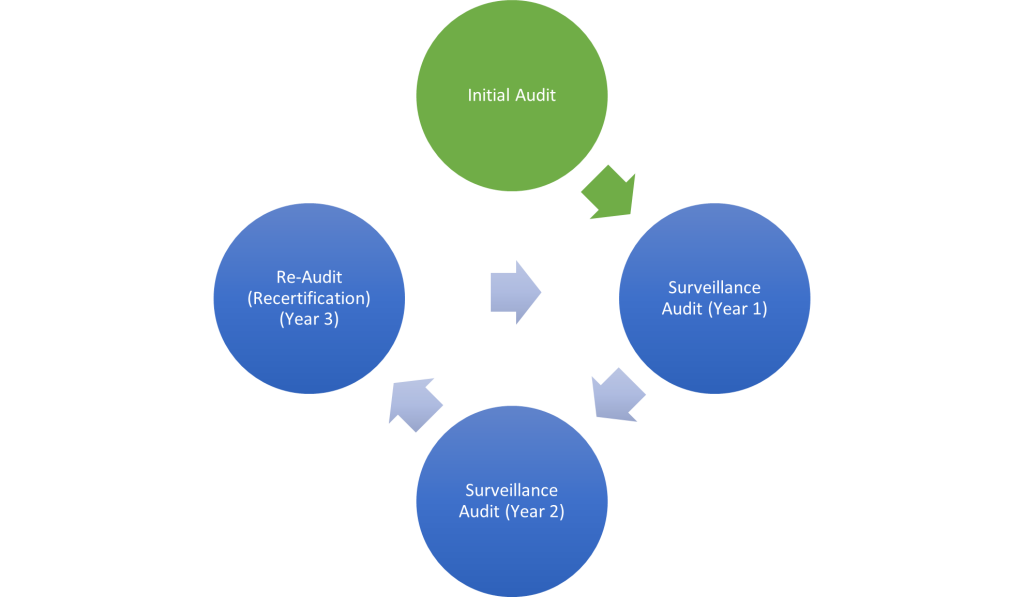
The MDSAP audit is typically build on to the existing ISO 13485 certification audit of the Quality Management System with a 3-year audit cycle.

Figure 1 MDSAP Certification Cycle

Will MDSAP come to the EU and UK?

There is much talk regarding the use of MDSAP by the EU and UK. While I am a strong advocate in global harmonisation, the existing members joined MDSAP to find a harmonised way to create a robust process for standardising QMS requirements from a position where they needed to find a suitable and robust process. Regardless of the state of play in the EU and UK, both regions already have robust mechanisms for the surveillance of ISO 13485, largely provided by the technical and commercial expertise of EU and UK Notified Bodies and Approved Bodies (as part of ISO13485 certification/IVDR conformity assessment), so the utilising MDSAP would be less impactful.

The opportunity would be regarding the outward facing regulatory convergence of EU and UK to align, and reduce burden for accessing other markets, MDSAP would be a good way of doing this. We have seen TGA become well placed in MDSAP/IMDRF mainly utilising CE marking for supporting AUS market access.

The challenge with MDSAP is that each jurisdiction has specific requirements, which make the MDSAP process clunky. The key to an improved model is to remove local requirements as much as possible, however this is dependent on global alignment at a political as well as regulatory level.

References

If you’d like to discuss MDSAP with us, you can book a call with the IVDeology team as we navigate this new programme and what it means for you as a manufacturer or provider of IVD’s and devices with each of the individual requirements. Being part of BIVDA (British In Vitro Diagnostics association), we’re in a great position to be able to receive and understand information and distribute to our networks as it comes, in a reliable and digestible way.

Or if you’d like support in other areas of Quality assurance or regulatory compliance, we’d be happy to chat with you. We can support with Quality management system implementation, transfer or uplifting.

We’ll be keeping you up to date with MDSAP news on our LinkedIn page and website, so do follow up on our socials and keep up to date with IVDeology along with Abingdon Health PLC.

Written by Stuart Angell, MD and Co-founder of IVDeology and IVDeology UKRP

Posted on

Performance Evaluation: The critical component in bringing your product to market and keeping it there

Abingdon Health and IVDeology Ltd have decades of  In-Vitro Diagnostic (IVD) regulatory compliance experience where our teams support your entire product journey from ‘cradle-to-grave’ to ensure you are getting your product to market in the quickest timeframe possible, reducing cost and strain, and keeping it compliant through its lifetime.

Abingdon Health also offer full-service contract development and manufacturing for lateral flow assays, bringing your idea to commercial success, with the benefit of an integrated regulatory and quality approach.

In our latest blog, Candice Vendettuoli Head of RAQA at Abingdon Health covers the importance of getting your Performance Evaluation (PE) right to streamline your route to market, and ensuring compliance to keep it there.

What is Performance Evaluation?

The In Vitro Diagnostic Regulation (IVDR) 2017/746, which entered into force in May 2017 and applied in May 2022, has introduced significant changes to the way in vitro diagnostic (IVD) medical devices are regulated in the European Union. One of the key aspects of this regulation are the new requirements for documenting the performance evaluation of IVD medical devices using a prescriptive document structure mandated within the Regulation.

Performance evaluation under IVDR is expected to be a continuous process throughout its entire lifecycle of the device. This process is crucial for ensuring that the device meets upon entry to the market, and continues to meet, the intended clinical benefits and safety as claimed by the manufacturer.

The mandated documents should be written to provide a comprehensive and structured narrative for the reviewer giving a clear and logical explanation of how the device was developed, verified and validated against the intended use/purpose claimed by the manufacturer. These documents are a requirement of the Technial Documentation described in Annex II and forms an essential part of the submission to the Notified Body

The mandated documents, unless they can justify why such studies are not applicable are as follows:

Performance Evaluation Plan

Ideally written during the early development of the device and updated regularly, this document has content prescribed within Annex XIII section 1.1 of the Regulation. Manufacturers are required to establish and regularly update the performance evaluation plan that outlines the device’s characteristics and performance, as well as the process and criteria used to generate the necessary clinical evidence.

Scientific Validity

The concept of scientific validity under the In Vitro Diagnostic Regulation (IVDR) 2017/746 is a cornerstone in the performance evaluation of in vitro diagnostic (IVD) medical devices. It refers to the association of an analyte with a clinical condition or physiological state, which must be substantiated with a medical-scientific rationale evidenced through a systematic literature search

Analytical Performance

Analytical performance refers to a device’s ability to accurately and reproducibly measure an analyte, marker, or molecule, which is a strictly technical performance without the need for correlation with a targeted pathology.  There are analytical performance characteristics mandated within Annex I section 9.1(a) including assessing the accuracy, sensitivity and specificity,

Clinical Performance

Clinical performance is defined as the ability of a device to yield results that are correlated with a particular clinical condition, physiological or pathological process, or target population and intended user. Manufacturers must demonstrate clinical performance through one or more of the following:

  • Clinical performance studies, carried out according to the IVDR requirements on clinical performance studies described in Articles 57-77, Annex XIII section 2 and, if applicable, Annex XIV for studies other than those using leftover samples
  • Scientific peer-reviewed literature on the device under evaluation, or
  • Published routine diagnostic testing.

Performance Evaluation Report

The report (also known as a ‘PER’) provides a summary of the clinical evidence collected through the previous reports. An assessment can then be made against the current state of the art in diagnostics and medicine that a positive benefit-risk ratio of using the device for its intended purpose has been met and then all data has been collected.

This rigorous approach ensures the reliability and effectiveness of in vitro diagnostic devices within the European Union, with the primary aim of protecting public health by requiring high levels of safety and performance of these devices to be evidenced.

For manufacturers, understanding and adhering to the IVDR’s performance evaluation requirements is vital for successful market introduction of their IVDs in the European Market. It involves a comprehensive understanding of the general safety and performance requirements (GSPR), as well as the specific guidelines on performance evaluation stipulated in Article 56 of the IVDR.

Abingdon Health and through its subsidiary IVDeology Ltd , can offer support and guidance to help companies navigate these new and complex EU Performance Evaluation requirements.

We offer a full-service solution for all your regulatory and quality requirements including:

Contact Us today to book some time with one of our industry experts to understand how we can support you bringing your product to market and keeping it there.


Posted on

The MedTech Summit: A reflection

The IVDR journey is a long and difficult path but look how far we have come. Stuart Angell, Managing Director and co-founder of IVDeology attended this years 2024 MedTech Summit in Brussels and shares his thoughts below on the event as it happened.

I was lucky enough to attend the annual MedTech Summit in Brussels this week. I have now attended this event either in-person or virtually since 2019 and the event continues to provide enormous value to regulatory professionals in the medical device and IVD sector.

I was asked to chair the in vitro diagnostic medical device (IVD) track on day 2, including presenting on the regulation of IVDs in the United Kingdom; and I also listened intently to great presentations on the current US (FDA) and European (IVD Regulation (IVDR)) regulatory landscape.  Suffice to say there is a great deal of positive change and complexity; and it was great to get a refresher on the current state of play!

Here are my overall thoughts on the event.

1) The UK remains a key market of interest

Much of my focus this year has been on the regulation of IVDs in the UK, including the utilisation of international recognition, and the domestic under UKCA marking.  I remain a strong advocate of the benefits of UK market access, and the potential for the UK being a world leader in the regulation of IVDs and medical devices. The UK medical device market is worth over €17 billion per annum and potentially offers a route to early adoption of new IVD technology; and it was encouraging to hear the overwhelming support and interest in the UK. The International Recognition is generally considered a positive and progressive step, however, there continues to be uncertainty in the domestic UKCA mark, and its role in global recognition.

2) The US offers a higher degree of certainty; IVDR remains in transition but will come good

This year had much more focus on US Regulation, and with good reason! While the IVDR continues to be implemented, the US is now considered a stable and predictable choice for market access. However, the US 510(k), De Novo and PMA routes should never be seen as an easy route to market. It still requires a great deal of effort to effectively achieve compliance.

For the last few years, l have been highlighting the challenges of IVDR, and the ongoing infrastructural issues that is making the uplift to IVD Regulation from IVD Directive so challenging. While many questions remain, I am taking this opportunity to reflect on the progress that has been made. Ask yourself: “what do I know now about IVDR than I did 12 months ago?” – The chances are quite a lot! So as an industry, we are all heading in the right direction albeit with many miles still to go.

3) We should all encourage and support structured dialogue

One of the challenges with the IVDR is the inability for Notified Bodies to offer advice and consultation.  This has cut off access to technical experts who may have been utilised to provide essential feedback on how to compile and construct technical documentation and performance studies. Developing a structured process for engaging with Notified Bodies, offers a chance for early dialogue on how to successfully achieve compliance. This is especially important for SMEs, or novel devices where the route to compliance is less well understood. Similar models have been employed as part of the US FDA Pre-submission process, and more recently, the UK MHRA IDAP Pilot.

Building this into the IVDR process would allow greater clarity to the industry, making IVDR more understood and ultimately lead to a higher chance of success.

In recent years (and I am guilty of this), we have pointed the finger at what is wrong with IVDR be it lack of guidance from the commission, resources from the Notified Body, or the inactivity of Manufacturers. And yes, some challenges remain, but what I am noticing this year is the desire to bring all stakeholders together to understand areas of weakness and opportunities for improvement which we can all learn from.

One key takeaway for me is the challenges of dealing with the regulatory complexity. This is a challenge for the largest multinationals dealing with a variety of products at different stages of their lifecycle; but also, for SMEs looking to launch one or two products; and considering which markets; and whether to manage the process internally or outsource. Certainly, managing the regulatory process, including post-market surveillance, has become more complex under IVDR; and outsourcing this has got to be a serious consideration; the positive is that these requirements are increasingly aligned across the UK, EU and the USA.

Overall, we all have a part to play in ensuring new innovative products get to market in the UK, Europe and the US; and improving health outcomes. Whilst the recent years have been challenging there is light at the end of the tunnel which should being to offer more certainly and more alignment of regulatory requirements across these jurisdictions which should be a real positive development. So, while the road remains long and challenging, why not take a moment to look back and see how far we have come.

IVDeology’s team has over 30 years’ experience supporting customers on quality assurance and regulatory compliance within the medical device and IVD market.  IVDeology’s services include supporting customers on regulatory filings in a range of territories including EU CE-marking (IVDR), USA (FDA), UK (UKCA) and other jurisdictions, including technical file build, regulatory submissions, regulatory gap analysis, analytical and clinical performance evaluation.

Stuart Angell, Managing Director, IVDeology

We also provide a range of quality assurance services including quality management system (QMS) build, QMS audit and full outsourcing or remote management of QMS systems. We also can be your UK or EU Responsible person.  If you would like to discuss any specific requirements, please contact IVDeology’s highly experienced team or click here.


Posted on

Consultation on UK Common Specifications

On the 21st May 2024, the Medicines & Healthcare products Regulatory Agency (MHRA) launched a consultation on common specification requirements for invitro diagnostic devices. The aim of this consultation is to gauge industry opinion over a 4 week period on introducing common specifications requirements for certain high risk IVD devices placed on the Great Britain (GB) market.

What are common specifications?

Common specifications (CS) set out a minimum set of performance requirements for specific high risk IVDs, principally to ensure a higher level of patient safety. These common specifications will replace the existing ‘Common Technical Specifications’ described under the current Medical Device Regulations (UK MDR 2002).

The consultation asks the following questions:

  • Should GB common specifications align with the European equivalent, as set out under (EU) 2022/1107
  • Should monitoring for common specifications be included within a Post Market Performance Follow-up Plan (a key document to describe post market performance data collection)?
  • Should Covid-19 IVD devices meet a common specification rather than meet the existing CTDA requirements?

The consultation is an opportunity for industry to offer a view on how aligned GB common specifications should be to the EU. In addition, feedback can be given for the potential removal of the much-discussed CTDA process, which could mean that Covid-19 IVD devices will undergo the general process for conformity assessment via UK approved bodies.

You can submit your views and include comments on the consultation here. The consultation is due to end on the 18th June, so I would encourage any interested parties to submit their views – this is an opportunity to shape the way CS are used in GB.

As a UK provider of quality and regulatory services, IVDeology are proud to engage with the IVD diagnostic keen to support IVD manufacturers on IVD market access. For further information on how we can help, please contact [email protected]

Written by Stuart Angell, MD and Co-founder of IVDeology Ltd and IVDeology UKRP Ltd

Posted on

Navigating the Shift from IVDD to IVDR

Key considerations for lateral flow providers; is it time to outsource your legal manufacturer requirements?

In this regulatory blog Abingdon’s Head of Quality Assurance & Regulatory Affairs Candice Vendetuolli outlines the transition from IVDD to IVDR for lateral flow tests and its implications for manufacturers. One key consideration is whether to use a manufacturing company such as Abingdon Health with an established quality management system operating under IVDR.

Abingdon Health’s team has over 20 years experience in the lateral flow market and is a knowledge leader in the scale-up, transfer, manufacturing and regulatory approval of lateral flow products across a range of sectors including clinical (self-test, point of care), animal health, plant pathogen and environmental testing.

Introduction:

The In Vitro Diagnostic Device Regulation (IVDR) has ushered in a new era for the regulation of diagnostic products, impacting lateral flow tests significantly. As the industry adapts to these changes, outsourcing legal manufacturing to contract service providers with a compliant Quality Management System (QMS) under IVDR is becoming a strategic move for many companies and can remove a major headache.

Transition from IVDD to IVDR

The shift from the In Vitro Diagnostic Directive (IVDD) to the In Vitro Diagnostic Regulation (IVDR) marks a paradigm change in the regulatory landscape. IVDR, implemented in 2017, aims to enhance the safety and performance of in vitro diagnostic devices, including lateral flow tests. Manufacturers must adhere to more stringent requirements, covering clinical evidence, performance evaluation, and post-market surveillance.

The transition to the IVDR has caused significant challenges with infrastructure, Notified Body availability and manufacturing readiness resulting in the European Parliament voting to approve a further extension to the transition period. We took a deep dive in the impact of the extension in our blog last month on IVDR Transition Update which you can take a look at here.

Whilst the extension will be a relief for many, the requirements for manufacturers to prepare are extensive, and this should not be viewed as an opportunity to pause.

Impact on Lateral Flow Tests

Lateral flow tests, widely used for quick and simple diagnostics, face notable changes with the IVDR transition. The regulation demands comprehensive documentation, increased clinical evidence, and heightened scrutiny on post-market surveillance. Manufacturers need to invest in updated technologies and processes to comply with these stringent requirements.

Outsourcing Legal Manufacturing to Contract Service Providers

Amidst these changes, outsourcing legal manufacturing to contract service providers with established and compliant Quality Management Systems operating under IVDR has emerged as a strategic solution.

Providers such as Abingdon Health offer specialized expertise, infrastructure, and a streamlined process to navigate the complexities of the new regulatory framework. Abingdon Health’s Quality Management System operates under IVDR and therefore the addition of new products is a relatively straightforward process and can provide a more rapid and cost-effective transition to IVDR for lateral flow products.

Instead of having to replace your current IVDD compliant QMS with one that meets IVDR; or having to create a QMS of IVDR from scratch; you can tap into Abingdon’s existing QMS. Furthermore, given the requirements under IVDR are more onerous (e.g. post market-surveillance); outsourcing these activities to an experienced provider may make more sense; and be more cost-effective. Finally, if you are a company with one or a small number of products, it is very inefficient to run a QMS purely for this; with the fixed costs of running a QMS being significant.

Why Outsource Manufacturing under IVDR

  1. Expertise and Experience:

Contract service providers bring a wealth of experience and expertise in navigating the intricacies of IVDR. Their teams are well-versed in the regulatory landscape, ensuring compliance and reducing the risk of errors. Abingdon’s team has experience of working with notified bodies and managing the regulatory process on your behalf.

  1. Efficiency and Speed:

Outsourcing manufacturing to a specialized provider accelerates the production process. These providers are equipped with advanced technologies and efficient workflows, enabling quicker turnaround times for lateral flow tests. Abingdon’s Quality Management System is already established under IVDR; and therefore, it’s much quicker to use Abingdon rather than establish a brand-new quality management system for one product for example.

  1. Cost-Effectiveness:

Leveraging a contract service provider can be cost-effective compared to establishing in-house capabilities compliant with IVDR. Companies can allocate resources more efficiently, focusing on core competencies while relying on the expertise of external partners such as Abingdon.

  1. Risk Mitigation:

With IVDR introducing stricter regulatory requirements, outsourcing to a reputable service provider mitigates risks associated with compliance. These providers invest in continuous training and updates to ensure adherence to the latest regulations. For example, the post-market surveillance obligations under IVDR are significant and Abingdon Health has these processes established. This gives Abingdon’s customer peace of mind that these ongoing obligations are being dealt with.

  1. Flexibility and Scalability:

Contract manufacturing offers flexibility and scalability, crucial in the dynamic landscape of diagnostic devices. Companies can adjust production volumes based on market demands without the constraints of maintaining fixed in-house capacities.

  1. Access to Advanced Technologies:

Contract service providers often invest in cutting-edge technologies and state-of-the-art facilities. Outsourcing allows companies to benefit from these advancements without the upfront costs associated with acquiring and maintaining such resources.

  1. Regulatory Intelligence

The Abingdon Health group are ideally placed within the IVD industry to scan the horizon to monitor and adapt to updates ad changes to the European regulatory landscape, to ensure that our regulatory and quality system are state of the art and compliant to international standards.

Examples of IVDR transition and why outsourcing makes sense.

One example of why IVDR transition makes sense is for growth companies developing a new lateral flow test. Tapping into Abingdon Health’s established Quality Management System will save significant time and money and speed up the time to market and revenues.

A second example is an established diagnostics company selling a range of products that are CE-marked under IVDD. The Quality Management System is set up to manage all products and therefore if certain products are being prioritised for transition under IVDR, for example if they are Class D (high risk) tests then it may make sense to outsource the transition of these products to a contract service provider such as Abingdon Health. This keeps the process separate and “clean” and also means that you can leverage off Abingdon’s established Quality Management System.

Post Market-Surveillance

Post-Market Surveillance (PMS) is worth setting out in more detail. It is a critical change to the approach under IVDR and requires a lot more consideration, and resource. Abingdon Health has established processes to manage this process effectively on behalf of its customers.

The key requirements of post-market surveillance for Class A and B products are to summarise the results and conclusions of the analyses of the post market surveillance gathered, together with a rationale and description of any preventative and corrective actions taken.

In addition, for Class C and D devices other requirements include the conclusion of the benefit-risk determination, the main findings of the PMPF and the volume of sales and estimate of the size and demographics of the users. This information needs to be updated per product annually.

The PMS documentation requirements are significant: PMS System (all products), PMS Plan (all products), PMS Report (Class A and B products), PSUR reports (Class C and D products), SSP reports (Class C and D products) and if required for any class of products: Vigilance Reports, Trend Reports and FSCA reports. It is critical that this information is kept up to date as this information can be reviewed during your annual audits or unannounced audits and also will be reviewed at least once every 5 years as part as product re-certification.

Key Takeaways

The transition from IVDD to IVDR brings both challenges and opportunities for manufacturers of lateral flow tests. Outsourcing legal manufacturing to contract service providers operating under IVDR offers a strategic avenue for companies to adapt to the evolving regulatory landscape efficiently. By tapping into external expertise, leveraging advanced technologies, and ensuring compliance, businesses can navigate the complexities of IVDR while maintaining a focus on innovation and market competitiveness.

Decades of experience in taking tests from concept to commercialisation has led to Abingdon Health establishing effective processes to minimise risk and maximise the chances of commercial success. Abingdon’s regulatory team has experience on managing the IVDR transition process and ongoing obligations and can support your inhouse team or provide a fully outsourced regulatory solution to ensure you are well-prepared for your IVDR transition.

If you would like to understand more about the regulatory process, including FDA, CE-marking and UKCA-marking and discuss any specific requirements or concerns, contact a member of the IVDeology team by clicking here

Or if you’d prefer an easy and on-the-go accessible app right on your handheld device such as phone or tablet, you can download our IVDeology app which has the current IVDR specification handbook and for quick access to support from IVDeology – available for Android and Apple Store FREE download

Posted on

A review of the MHRA International Recognition Statement of Policy

On the 21st May, the Medicine & Healthcare products Regulatory Agency (MHRA) published a Statement of policy  intent for the international recognition of medical devices. The purpose is to describe the overarching policy for recognising other regulatory approvals for medical devices including IVDs. The update to the UK Medical Device Regulations MDR 2002 will be expected in 2025-2026 following the principles described in this policy.

This is the first publication that lays out a rationale and possible process for international recognition, and is a top-level view of the process, where much of the detail will be covered when the Draft Statutory Instrument is published later in the year.

The access routes may not be used for the following device/device types:

  • Exempted in-house devices
  • Custom-made devices
  • Some Software as a Medical Devices
  • Companion Diagnostics relying on equivalence to a predicate, or where associated medicinal substances that are not licenced in the UK

Comparable Regulator Countries (CRCs)

The principle of international recognition is for the utilisation of other regulatory systems. This is typically based on International Medical Device Regulatory Forum (IMDRF) principles.

The initial CRCs described in the policy are:

  • Australia (TGA)
  • Canada (Health Canada)
  • European Union
  • United States of America (FDA)

Proposed Access Routes

Figure 1 Proposed IVD Access Routes

Recognition of CRCs – Class A non-sterile

  • Self-registration with MHRA
  • Declaration to quality management system (ISO13485)

Reliance of European Union (IVDR) – Class A sterile, B, C, D

  • Submission of technical documentation (IMDRF)
  • Post market surveillance plan and report (PMSR or PSUR)

Reliance with Abridged Assessment and Device Specific Requirements of Australia, Canada and United States of America

  • Submission of technical documentation (IMDRF)
  • Post market surveillance plan and report (PMSR or PSUR)
  • Summary of safety and performance (Class C and D)

Basic Requirements

To access the UK market, the devices will be required to meet specific UK requirements, these could include:

Further details on the UK specific requirements are expected to be published in alignment to the IVD roadmap. These will be laid down within the Statutory Instruments which will update the current Medical Devie regulation.

While the information provided is very broad, and much of the detail will be provided in the draft SI documents, the approach taken by the MHRA should be seen as a hugely positive step. The routes proposed provide a pragmatic route, especially if utilising existing CE marking, or 510(k) submissions.

It remains to be seen what the roles and responsibilities for the economic operators in the regulatory chain are, including the UKRP, and the role of UK Approved Bodies. However, I welcome the opportunity to read, understand and reflect on the possible process for International Recognition.

How IVDeology can help?

As a UK based provider of IVD specific quality and regulatory compliance services, we are proud to offer advice and support for the IVD industry on UK market access. This includes:

  • UK Responsible Person (UKRP)
  • UK Compliance readiness assessment
  • QMS review and uplift to UK MDR requirements

For any information on these services, or for any questions on the transition to UKCA, please contact [email protected].

Note: This blog is a personal view of Stuart Angell, Managing Director of IVDeology, based on published documents referenced.

#IVDR #MDR #FDA #510k #IVD #invitrodiagnostics #lateralflow #UKCA